HR5646-118 · 118th Congress
Signed
Signed Dec 23, 2024Stop Campus Hazing Act
Stop Campus Hazing Act This bill requires institutions of higher education (IHEs) that participate in federal student aid programs to report hazing incidents. Specifically, the bill requires each IHE to disclose hazing incidents that were reported to campus security authorities or local police agencies in its annual security report. The bill defines the term hazing to mean any intentional, knowing, or reckless act committed by a person against a student (regardless of that student's willingness to participate), that (1) is connected with an initiation into, an affiliation with, or the maintenance of membership in, an organization (e.g., a club, athletic team, fraternity, or sorority); and (2) causes or is likely to contribute to a substantial risk, above the reasonable risk encountered in the course of participation in the IHE or the organization, of physical injury, mental harm, or degradation. In addition, each IHE must develop and distribute as part of its annual security report a statement of policy regarding the following: (1) a comprehensive program to prevent hazing, which must include information on hazing awareness and hazing prevention; and (2) the IHE's current campus policies on hazing, which must include procedures that comply with specified collection and reporting requirements.
LOBBYING ON THIS BILL
39 federal lobbying reports name this bill in their activity descriptions · LDA disclosures
AMERICAN COUNCIL ON EDUCATION6 reports
FRATERNAL GOVERNMENT RELATIONS COALITION5 reports
THE OHIO STATE UNIVERSITY3 reports
SUSAN B ANTHONY LIST3 reports
UNIVERSITY OF MICHIGAN2 reports
NATIONAL ASSN OF INDEPENDENT COLLEGES & UNIVERSITIES2 reports
OREGON STATE UNIVERSITY2 reports
ASSOCIATION OF AMERICAN UNIVERSITIES2 reports
⟳ The revolving door — lobbyists on this bill with disclosed former government roles
Pamela DavidsonProf. Staff, Senate HELP Committee, 2019-21; Senior Policy Advisor, Sen Bill Cassidy, 2015-19; Prof. Staff/Leg. Asst, House Ed & Workforce Comm., 1997-2007; Leg. Asst, Rep Jon Christensen, 1995-97; Leg. Asst, Rep Tom Delay, 1992-95
Sarah FlanaganVP, Government Relations & Policy Development
Stephanie GieseckeDir., Budget & Appropriations
Christina WestAssociate V/C, Vanderbilt University Federal Relations
Jody FederDir., Accountability & Regulatory Affairs
Justin MonkDirector of Student and Institutional Aid Policy
“Covered position” is the former government job lobbyists must disclose by law (LDA §4). Prior service is stated on the filings; it carries no implication of wrongdoing. Full revolving-door board →
A report naming a bill means the organization disclosed lobbying activity on it — the disclosure does not state a position for or against.
VOTE BREAKDOWN
No recorded floor vote
Most bills never receive a recorded roll-call vote — they're referred to committee and don't advance to the floor. The sponsor and funding context on this page still tells you who is behind it and what industries have a stake.
SPONSORS
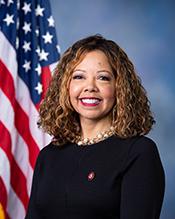
Lucy McBath
D-GA · Primary
42 COSPONSORS
BIPARTISAN● 27 D● 15 R
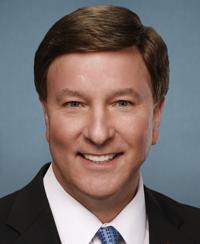
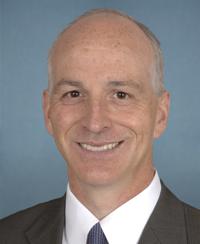
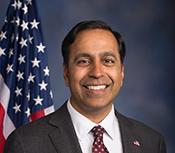

+36 more (see dot grid above)
SPONSOR FUNDING
Top industries funding McBath
Lawyers & Lobbyists19%
Lawyers & Lobbyists 19% of classified donations
Single-Issue Advocacy16%
Single-Issue Advocacy 16% of classified donations
Securities & Investment9%
Securities & Investment 9% of classified donations
Health Services8%
Health Services 8% of classified donations
Technology5%
Technology 5% of classified donations
TRAIL AI
HR 5646, the Stop Campus Hazing Act, was introduced by Representative Lucy McBath of Georgia during the 118th Congress and has been signed into law. The bill addresses hazing practices on college and university campuses, establishing federal measures to prevent such conduct. Voting data for this legislation has not yet been made publicly available.
Based on public voting records. Does not imply causation.
TIMELINE
INTRODUCEDSep 21, 2023
PASSED SENATEDec 11, 2024
SIGNEDDec 23, 2024
DATA SOURCES
Bill data: Congress.gov · 117th–119th Congress (2021–present)
Vote records: House Clerk / Senate · 2021–present
Reflects public records. Does not imply causation.