HR3797-118 · 118th Congress
Signed
Signed Dec 23, 2024Paperwork Burden Reduction Act
Paperwork Burden Reduction Act This bill modifies provisions under the Patient Protection and Affordable Care Act so that employers and health insurance providers are no longer required to send tax forms to covered individuals showing proof of minimum essential coverage (1095-B and 1095-C tax forms) unless a form is requested. Currently, employers and health insurance providers that provide minimum essential coverage must report this information for each covered individual to the Internal Revenue Service (IRS) and provide a copy of this information to the covered individual (through 1095-B and 1095-C tax forms) by January 31 of each year. The IRS allows for 1095-B tax forms, which are sent by certain health insurance providers and employers, to be made available to individuals only upon request. The bill provides statutory authority for this flexibility and extends this flexibility to 1095-C tax forms, which are sent by certain large employers. Such requests must be fulfilled by January 31 or 30 days after the date of the request, whichever is later. Employers and health insurance providers must give individuals timely notice of this option, in accordance with any requirements set by the IRS.
MONEY ON THIS BILL
Which donor industries fund each side of the vote — total contributions from that industry to those members, all cycles · plus lobbying activity in affected industries
⬆ YEA voters — top donor industries
No data yet.
⬇ NAY voters — top donor industries
No data yet.
◎ Lobbying activity by issue area
- health_services959 filings
- insurance63 filings
Dollar figures are each industry's total contributions to those members across all tracked cycles — not money given for this specific bill. Statistical patterns in public records; correlation, not causation.
LOBBYING ON THIS BILL
19 federal lobbying reports name this bill in their activity descriptions · LDA disclosures
NATIONAL ASSOCIATION OF WHOLESALER-DISTRIBUTORS8 reports
SMALL BUSINESS & ENTREPRENEURSHIP COUNCIL (SBE COUNCIL)7 reports
AMERICA'S HEALTH INSURANCE PLANS INC (AHIP)2 reports
NATIONAL ASSOCIATION OF BENEFITS AND INSURANCE PROFESSIONALS1 report
TARGET CORPORATION1 report
⟳ The revolving door — lobbyists on this bill with disclosed former government roles
Alexander HendrieAssociate Vice President-Government Relations
Brian WildFormer Deputy Assistant to the VP of the United States (2004-2005); Former Senior Advisor to the Speaker of the House of Representatives (2010-2011); Former Chief of Staff/Legislative Director, Rep. Pat Toomey (2001-2004)
Anthony MitchellSenior Policy Advisor and Legislative Assistant, Representative David Scott
Jade WestChief Government Relations Officer
Lauren WilliamsFormer Professional Staff Member, House Committee on Education & the Workforce
Sohini GuptaCounsel, Senator Evan Bayh
“Covered position” is the former government job lobbyists must disclose by law (LDA §4). Prior service is stated on the filings; it carries no implication of wrongdoing. Full revolving-door board →
A report naming a bill means the organization disclosed lobbying activity on it — the disclosure does not state a position for or against.
VOTE BREAKDOWN
No recorded floor vote
Most bills never receive a recorded roll-call vote — they're referred to committee and don't advance to the floor. The sponsor and funding context on this page still tells you who is behind it and what industries have a stake.
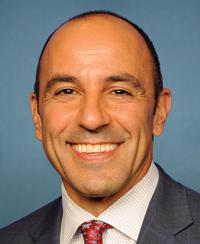
SPONSORS

Jason Smith
R-MO · Primary
1 COSPONSOR
DEMOCRATIC● 1 D
SPONSOR FUNDING
Top industries funding Smith
Securities & Investment15%
Securities & Investment 15% of classified donations
Lawyers & Lobbyists13%
Lawyers & Lobbyists 13% of classified donations
Health Services11%
Health Services 11% of classified donations
Insurance8%
Insurance 8% of classified donations
Agriculture6%
Agriculture 6% of classified donations
TRAIL AI
HR 3797, the Paperwork Burden Reduction Act, was introduced by Representative Jason Smith of Missouri during the 118th Congress. The bill has been signed into law. Voting data for this legislation is not yet available.
Based on public voting records. Does not imply causation.
TIMELINE
INTRODUCEDJun 5, 2023
PASSED SENATEDec 10, 2024
SIGNEDDec 23, 2024
DATA SOURCES
Bill data: Congress.gov · 117th–119th Congress (2021–present)
Vote records: House Clerk / Senate · 2021–present
Reflects public records. Does not imply causation.